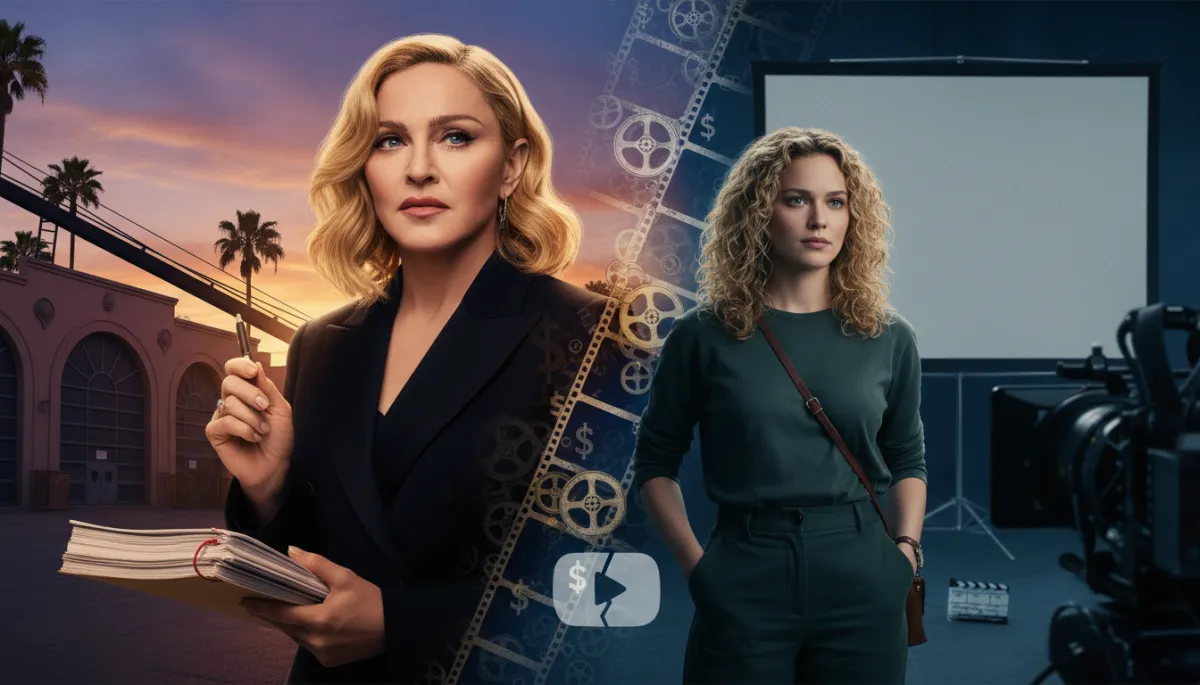
Madonna's Biopic Shelved: Budget Battle Revealed
Hollywood News, Madonna Biopic, Film Industry
Madonna Breaks Her Silence on Shelved Biopic: Inside the Budget Battle With Universal
In a new Interview magazine cover story, Madonna has finally explained why her long-gestating biopic with Universal Pictures was quietly taken off the slate, revealing a clash over budget, scope, and control that offers a revealing snapshot of how Hollywood weighs risk against ambition.
Four Years of Development, One Budget Stalemate
According to Madonna, the now-cancelled film was the product of a four-year push to bring her life story to the screen. She spent two years writing the script, then another two years at Universal Studios working with line producers on budgeting and casting. Universal had won a multi-studio auction for the project in 2021, signaling strong early confidence in a self-directed Madonna biopic anchored by a high-profile star and awards-season potential (as reported by The Daily Beast and El País).
Julia Garner, the Emmy-winning star of Ozark, ultimately landed the role of Madonna after a widely covered audition process. The casting choice seemed to solidify the film as a prestige project. But as the creative team refined the script and assembled a package, costs became the central sticking point. Madonna told Interview she believed her “extraordinary” and “huge” life required a budget to match, while Universal pushed for a more contained figure that aligned with its risk calculations on music-driven biopics.
Creative Control vs. Studio Risk: A Familiar Hollywood Tension
At the heart of the breakdown was creative control. Madonna was not just the subject of the film; she was also its co-writer and intended director. That level of involvement can be an asset in an autobiographical project, but it also shifts the balance of power between artist and studio. Madonna has long curated her own narrative, and the biopic was conceived as an extension of that authorship, not a sanitized, third-person account shaped primarily by executives and test screenings.
Her insistence on a large-scale, globe-spanning treatment—one that could fully depict the early New York years, the rise to superstardom, controversies, tours, and reinventions—ran into Universal’s assessment of what audiences might support at the box office. The studio, facing a market where mid- to high-budget dramas are increasingly scrutinized, appears to have favored a more modest approach. The result was a classic Hollywood impasse: an artist seeking authenticity and scale, and a studio tasked with protecting its bottom line.
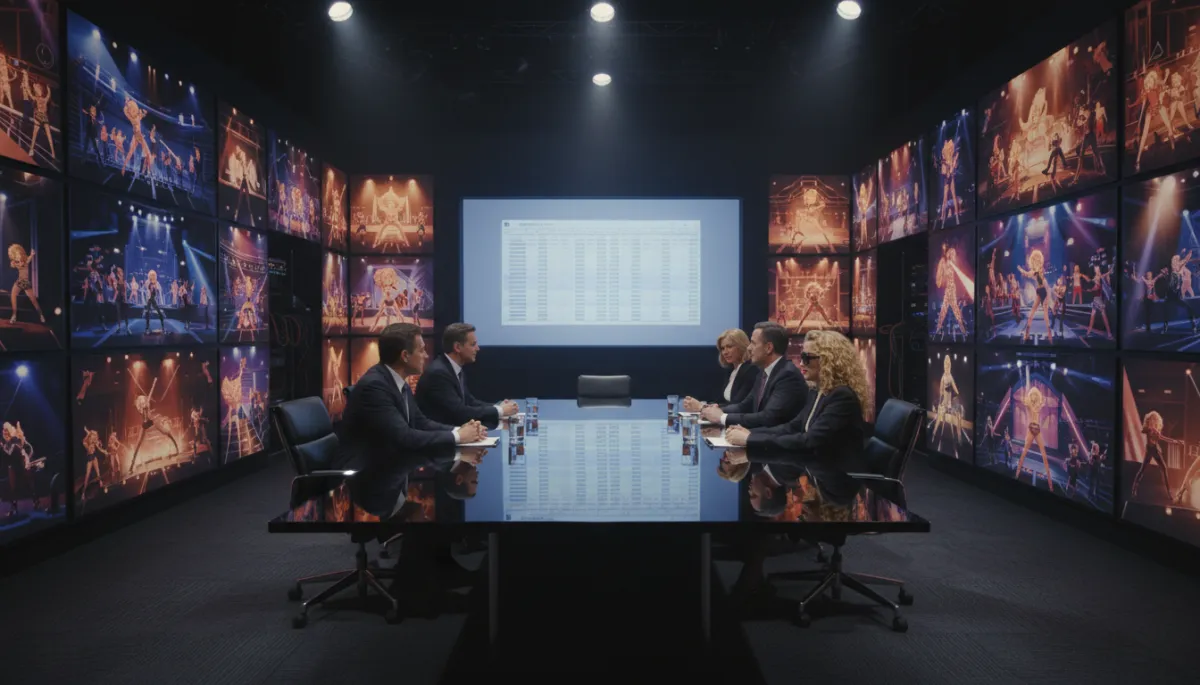
Behind every unmade biopic lies a clash of spreadsheets, schedules, and vision.
Hollywood Budget Realities: Serbia, Savings, and Skepticism
Madonna says she attempted to bridge the gap by proposing a cost-saving solution: moving production to Serbia, where shooting would be significantly cheaper than in Los Angeles, New York, or London. She characterizes the response from Universal as skeptical, recounting that some at the studio doubted she would stay on location for the full shoot. In comments cited by El País, she framed this as a misunderstanding of her work ethic, pointing to a career defined by endurance and reinvention rather than comfort.
The Serbia anecdote underscores a broader reality in modern Hollywood: even with tax incentives and international locations, large-scale biopics are high-risk ventures. Music rights, period settings, and extensive performance sequences all add to the bill. In an environment where franchises and IP-driven spectacles dominate studio slates, a star-led, R-rated music biopic—no matter how iconic its subject—faces intense scrutiny over every line item in the budget.
The Netflix Detour and the Price of a Script
After the film stalled, Madonna says Netflix approached her about reimagining the project as a limited series. The streaming format, on paper, offered more room to explore different eras of her career and potentially distribute costs across multiple episodes. She reportedly worked for eight to nine months trying to assemble the right writers and a showrunner, with producer Shawn Levy attached, but another obstacle emerged: rights to the original script.
Because the screenplay was developed under Universal, Madonna could not simply move it to a new home. She says she would have had to buy back her own script at what she calls an “extortionist’s price,” despite being its author. The situation highlights how studio contracts can separate artists from their work product, even when that work is deeply personal. In this case, the economics and legalities of script ownership were enough to halt momentum on the series version as well.
Artistic Resilience: From Unmade Film to “Confessions on a Dancefloor II”
With both the feature film and the Netflix series stalled, Madonna redirected her energy to music. She has described the frustration around the biopic as one of the catalysts for her upcoming album, Confessions on a Dancefloor II (often shortened to Confessions II), due July 3 via Warner Records, as reported by outlets including The Guardian and The Fader. The project reunites her with producer Stuart Price and marks a return to the dance-floor aesthetic of her 2005 classic.
Earlier this month, she premiered Confessions II – The Film, a short film built around the album’s first six tracks, at the Tribeca Festival. The piece, later released on YouTube, features cameos from Benedict Cumberbatch, Kate Moss, Sabrina Carpenter, Debi Mazar, and Julia Garner—creating an unexpected echo of the abandoned biopic. Rather than portraying Madonna, Garner appears as part of a dreamlike, immersive visual experience that folds the unmade movie back into Madonna’s broader multimedia universe.
Life Imitating Art on Apple TV+’s “The Studio”
The story of the failed biopic will also receive a meta-fictional treatment. Both Madonna and Garner are set to appear in Season 2 of Apple TV+ drama The Studio, in a storyline that mirrors the collapse of the film. The arc is expected to dramatize the creative and financial push-pull behind a high-profile project that never reaches the screen, offering viewers a stylized but informed look at how such decisions are made.
What Madonna’s Shelved Biopic Reveals About Hollywood Today
Madonna’s account of the biopic’s demise underscores three intertwined themes. First, creative control remains a central fault line in Hollywood, especially when artists seek to tell their own stories with minimal compromise. Second, budget realities—shaped by shifting audience habits, streaming competition, and cautious studios—can override even the most high-profile packages. Third, artistic resilience continues to be a defining trait for long-running careers: when one medium closes its doors, another often opens.
For now, Madonna’s life story will be told not through the sweeping studio biopic once promised, but through albums, short films, and scripted television riffs on what might have been. Whether the original project is ever revived—on film, streaming, or stage—remains an open question. What is clear is that the negotiations around it have become part of the narrative, adding another chapter to Madonna’s ongoing, and closely watched, dialogue with the entertainment industry.
